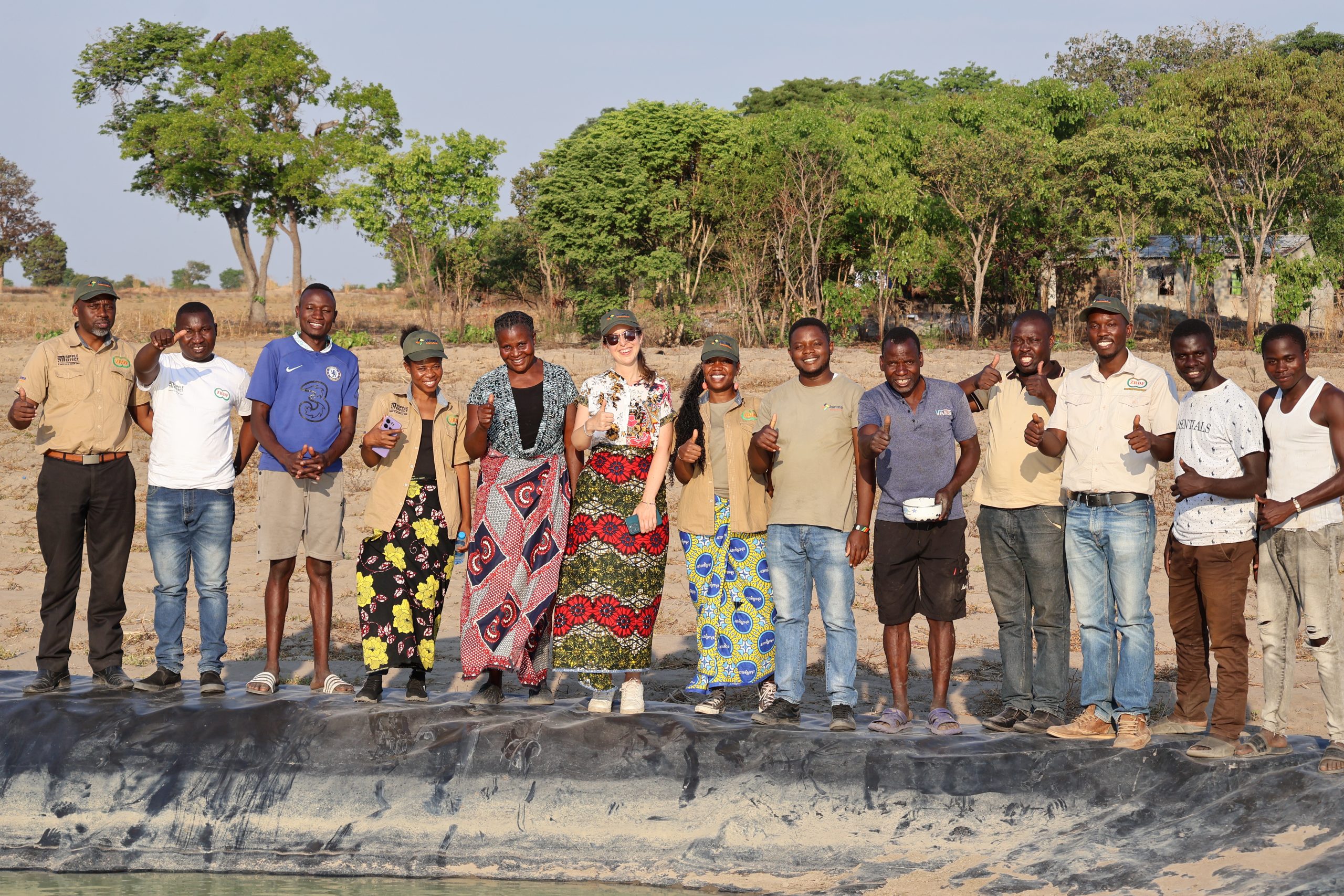
After more than fifteen years of partnership with the Zambian Rainbow Development Foundation (ZRDF), one thing has become clear: lasting impact is rarely the result of a single project, intervention or idea. It is built over time through many elements working together. ZRDF is a locally led organisation working alongside communities in some of the most remote parts of Zambia’s Central Province. Together, we supported an integrated approach to community development that recognises the many factors shaping people’s lives – livelihoods, household economic empowerment, education, health, water and sanitation, gender inclusion and community leadership. The approach recognises that stronger communities are built when these needs are addressed together rather than in isolation.
In the later years of the partnership, our support also expanded to include the development of an aquaculture social enterprise. Beyond improving livelihoods and food security, the initiative was designed to strengthen ZRDF’s long-term financial sustainability by creating a source of income that could be reinvested into future community development.
Over the past fifteen years, maize yields increased from around five bags per acre to twenty-two bags per acre, while seasonal farm income rose from approximately US$125 to US$550. Savings and Internal Lending Communities expanded from 11 groups to 478, creating new opportunities for households to save, invest and build financial resilience. School attendance increased from 63% to 81%, the pupil-to-teacher ratio improved from around 150:1 to 50:1, and under-five mortality declined from 7.5% to 4.2%, alongside significant improvements in childhood vaccination coverage.
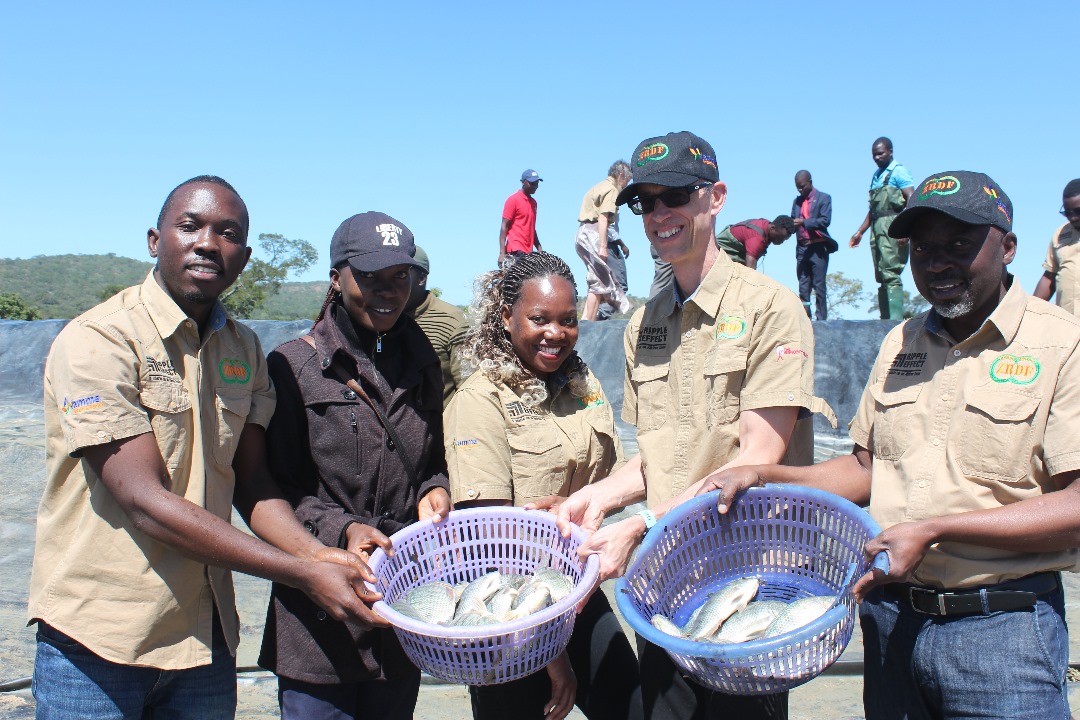
More recently, the aquaculture enterprise established through the partnership has harvested more than 10 tonnes of fish, generated over US$23,000 in sales, and trained more than 600 farmers and almost 200 young people, creating a new source of food, skills and income for surrounding communities.
But what is it that made all of this possible?
People create institutions, and strong institutions create lasting change
Strong institutions do not emerge by chance. They are built by people.
Over the past fifteen years, the strength of ZRDF has never been its projects alone. It has been the people behind them. A skilled and committed team willing to travel long distances to reach remote communities. People who invested time in building trust before introducing solutions. Leaders who understood that relationships with communities and government were just as important as technical expertise. A team that measured its work, learned from experience and continually looked for ways to improve.
That consistency earned trust. Communities knew who ZRDF was. Government departments wanted to work with them. Partners had confidence in supporting their work.
Projects may have created the immediate results, but it was the people behind the organisation who built an institution capable of delivering those results year after year.
Development works with people, not for them
One of the defining characteristics of ZRDF’s approach is that it is community-driven. Communities approach ZRDF because they have seen the changes taking place elsewhere and want to be part of that journey themselves.
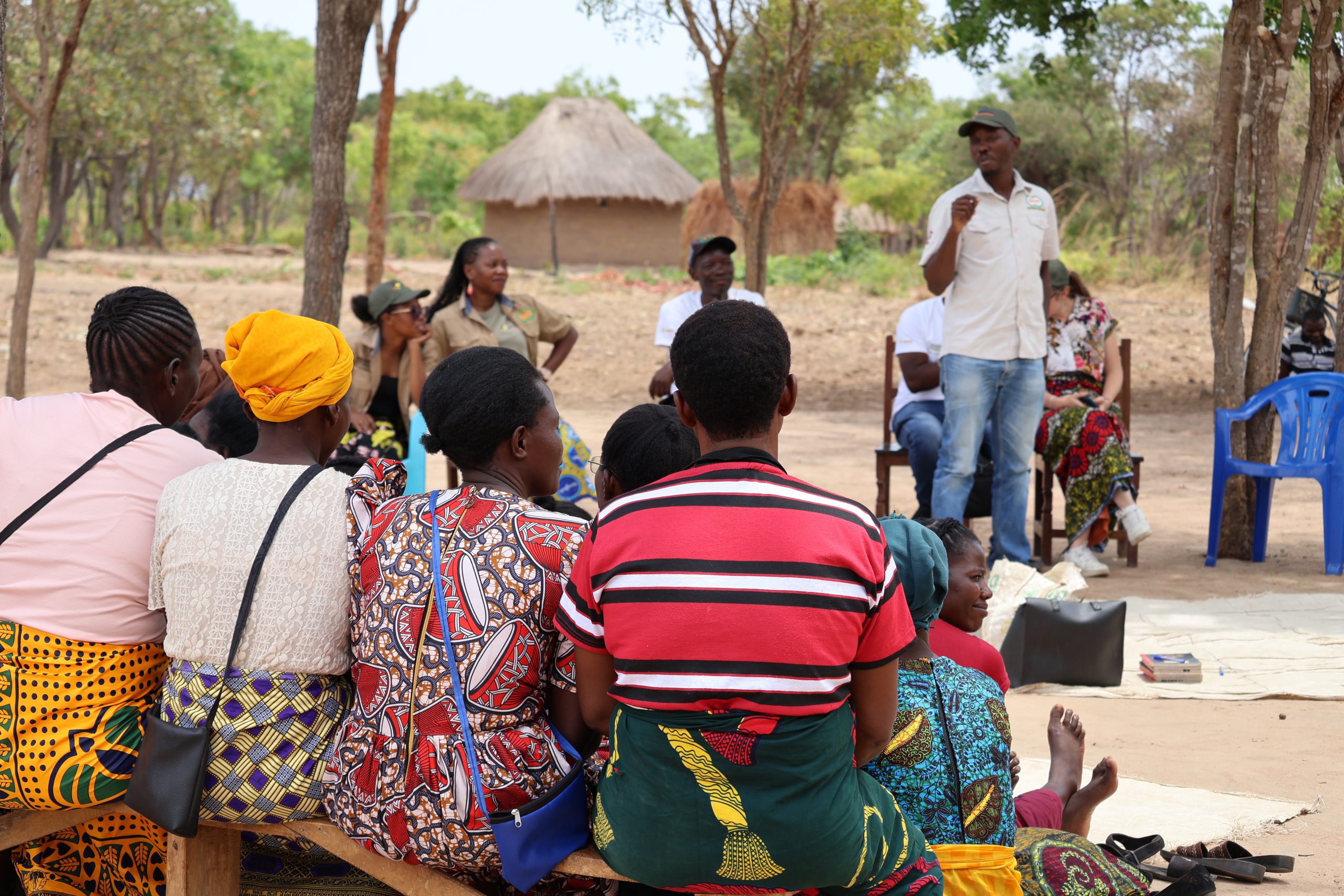
From the beginning, communities are treated as partners rather than beneficiaries. They help identify priorities, contribute labour, building materials or financial resources, and share responsibility for making projects succeed. When schools are built, communities help build them. When new farming practices are introduced, farmers choose whether to adopt them. Savings and Internal Lending Communities (SILC) succeed because members themselves save, lend and invest in one another.
That sense of ownership extends beyond individual projects. Families have opened their homes to children who live too far from school to travel each day, ensuring that distance does not become a barrier to education. Women have used SILCs to expand their farms, start businesses and improve household incomes. These are not outcomes that can be delivered by an organisation alone. They happen because communities have chosen to invest in their own future.
Relationships make it happen
Over the past fifteen years, one of ZRDF’s greatest strengths has been its ability to build those relationships. Relationships with communities meant people were willing to participate, contribute and take ownership. Relationships with traditional leaders ensured initiatives reflected local priorities. Relationships with government departments meant new schools received teachers, farmers could access technical support, and health initiatives complemented existing public services rather than duplicating them.
Those relationships took time to build. They were earned by consistently showing up, listening, keeping promises and demonstrating results. They also created opportunities that extended well beyond ZRDF’s own work. Government departments could use ZRDF’s networks to reach communities with health information and other public services, knowing they were working through an organisation that people already knew and trusted.
Relationships are not a by-product of development. They are one of the reasons development happens.
Learning turns setbacks into progress
Few projects unfold exactly as planned. Droughts, disease outbreaks, changing markets and unexpected technical challenges are part of working in rural development.
What stood out over fifteen years was not that ZRDF avoided setbacks, but how the organisation responded to them. When something did not work, the team looked for answers. They sought technical advice, built new partnerships, tested different approaches and applied those lessons to the next phase of the project.
The aquaculture project illustrates this particularly well. What began as an ambitious idea to improve food security and strengthen ZRDF’s long-term financial sustainability faced numerous technical challenges in its early years. Fish disease, production problems and management challenges could easily have ended the project. Instead, they became opportunities to learn. Today, the project has developed into a functioning social enterprise that provides training, supports local livelihoods and generates income that can be reinvested into community development.
Setbacks are inevitable. What matters is having the curiosity, determination and humility to learn from them.
Today, Jamma’s work has evolved towards Human-Centred Conservation, but the lessons from this partnership continue to shape how we work. Whether the goal is improving rural development or helping people and wildlife thrive together, lasting progress depends on strong local institutions, communities as partners, trusted relationships and a commitment to keep learning. These are the principles we take forward into every partnership and every conservation initiative we support.


© 2026 Jamma Conservation and Communities. Registered charity no. 1138785 | Designed by Oxygen

Active
Eland School is a community-based education initiative in the Khomani San community of South Africa’s Kalahari, delivering culturally sensitive early education. The school integrates the national curriculum with Indigenous knowledge and traditions to strengthen cultural identity and prepare learners for successful transition into secondary education.
Northern Cape, South Africa
Active
In many African rural areas, access to digital tools and support remains limited, leaving people of all ages disconnected from opportunity. This project is creating a central hub where community members can access support, build CVs, search for jobs, and stay informed.
Rietfontein, South Africa

Active
Is a registered Indigenous-led organisation working to protect the rights of Indigenous Peoples in Africa.
South Africa, Cape Town

Completed
This study examines the welfare impacts on wildlife from both human-caused and naturally induced mortality.
Oxford – partners with ALU in Kigali, Rwanda. Research impacts and relates to Southern Africa
Completed
This project conducts rigorous research to examine the potential role of regulated hunting in conservation.
Oxford based but research will impact Africa

Active
This groundbreaking project is the first to comprehensively assess the combined economic, conservation, and cultural benefits of non-commercial wild animal harvests in North America and southern Africa.
Based in Canada – North America and Southern Africa
Active
This project aims to unlock the $30 billion potential of Southern Africa’s wildlife economy by strengthening Community-Based Natural Resource Management (CBNRM) practices.
Based in Florida but carried out in (Mozambique, Kenya, Botswana, Namibia, South Africa)
Completed
This initiative strengthens the IUCN Sustainable Use and Livelihoods Specialist Group (SULi) to expand its reach and influence, especially within the Global South.
Based in London with Global membership network spreading to Eastern and Southern Africa region
Completed
This project provides critical support to governments developing policies to manage human-wildlife conflict (HWC), an escalating issue as human populations expand into wildlife habitats.
Global network with a focus in Africa
Completed
This project introduces sustainable fish farming practices to the Mkushi and Luano districts, where food security and income stability are pressing challenges.
Based in Zambia
Completed
This project takes a multi-faceted approach to improving livelihoods, health, and education in Zambia’s Mkushi and Luano regions.
Based in Zambia
Active
Human-wildlife conflict (HWC), especially with elephants, is a growing challenge in Mozambique, endangering conservation and community livelihoods. As populations expand, conflicts intensify, leading to crop destruction, property loss, and diminishing tolerance for wildlife. This project supports a comprehensive HWC management system across 32 high-impact districts.
Based in Mozambique
Active
Indigenous Peoples and Local Communities (IPLCs) across Southern Africa often face barriers to having their voices heard in decisions about natural resources that directly impact their lives. The Community Leaders Network (CLN) plays an essential role in advocating for these communities on issues like natural resource management, biodiversity conservation, sustainable agriculture, and eco-tourism.
Namibia – Windhoek (but spreads out to South Africa, Botswana, Namibia, Zimbabwe, Zambia, Mozambique, Malawi, Angola, Tanzania, and Madagascar)
Completed
This project addresses leopard conservation in the Western Cape, South Africa, a region where human encroachment and habitat fragmentation threaten wildlife.
Based in Eastern and Western Cape – South Africa
Completed
This project investigates perceptions around controversial conservation issues in sub-Saharan Africa.
Based in Oxford but carried out in Kenya, Tanzania, and Zimbabwe
Completed
This project amplifies the voices of Southern African rural communities who rely on sustainable wildlife management for their livelihoods and cultural heritage.
Based in Zimbabwe (but network spreads across South Africa, Botswana, Namibia, Zimbabwe, Zambia, Mozambique, Malawi, Angola, Tanzania, and Madagascar)