Our Journey: A Human-Centred Approach to Conservation
Jamma International was founded in 2010 from a deep appreciation for wild places and a growing recognition that conservation cannot succeed if it overlooks people who live with wildlife every day. After spending time in Southern Africa, experiencing its vast ecosystems and the realities of life for those who share the land with wildlife, one truth became clear: the future of wildlife is inseparable from the future of the people living alongside it.
In its early years, Jamma provided financial support to major conservation efforts across Southern Africa and the United Kingdom. But over time, it became evident that many well-intentioned efforts struggled to create lasting change because they did not fully recognise the rights, knowledge and decision-making authority of local communities. If conservation is to endure, it must be driven by those most affected by it.
In 2019, Jamma moved beyond traditional funding to take a more active role, working directly with communities, conservationists, and policymakers to develop conservation approaches that recognise ecological realities alongside social, cultural, and economic ones. With a small, hands-on team, Jamma focused on building relationships, strengthening expertise, and bridging the disconnect between decision-makers in the Global North and those living with the day-today realities of conservation in the Global South, in particular southern Africa. The goal was clear: to ensure that people most impacted by conservation decisions have a stronger voice in shaping them.
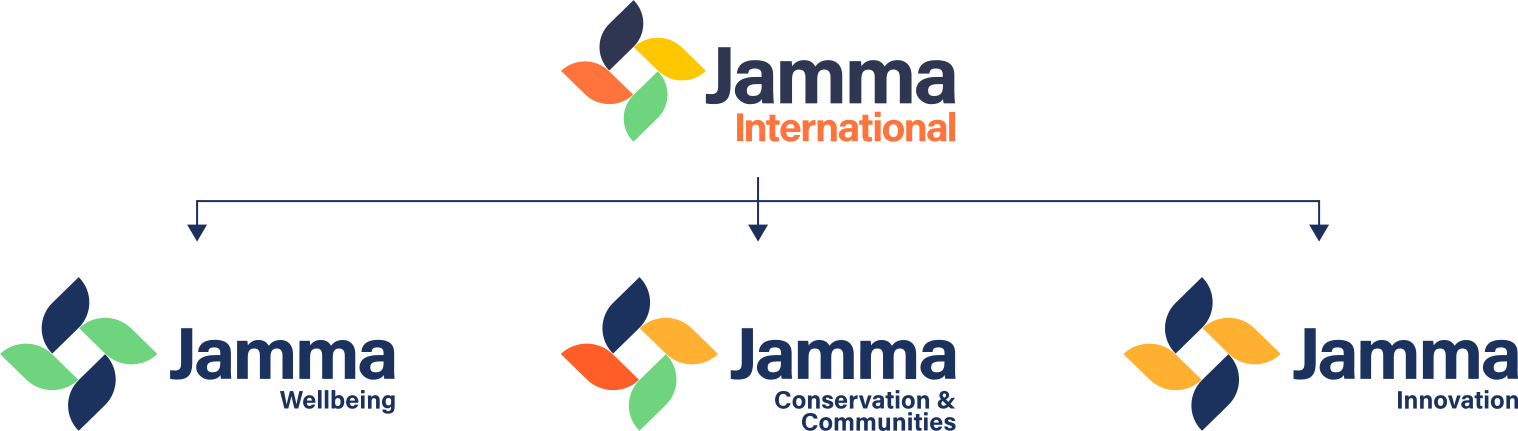
As Jamma’s work expanded, so did its structure. In 2024, recognising the diverse but interconnected challenges facing people and the planet, Jamma International became three distinct organisations -Jamma Conservation & Communities, Jamma Wellbeing, and Jamma Innovation -each with a focused mission. While Jamma Wellbeing and Jamma Innovation engage with broader social impact initiatives, Jamma Conservation & Communities remains dedicated to conservation approaches that respect local rights, strengthen biodiversity-based economies, and deliver practical, workable solutions for conservation and sustainable resource use.
Today, Jamma Conservation & Communities works through a Human-Centred Conservation (HCC) approach, recognising that conservation outcomes are shaped as much by social, cultural, and governance realities as by ecological ones. This approach centres the rights, knowledge, and lived experiences of Indigenous Peoples and Local Communities. It supports conservation strategies that are evidence-based, locally grounded, and responsive to the realities of sharing landscapes with wildlife. Through this lens, Jamma Conservation & Communities champions practical, long-term solutions that balance biodiversity conservation with human wellbeing.