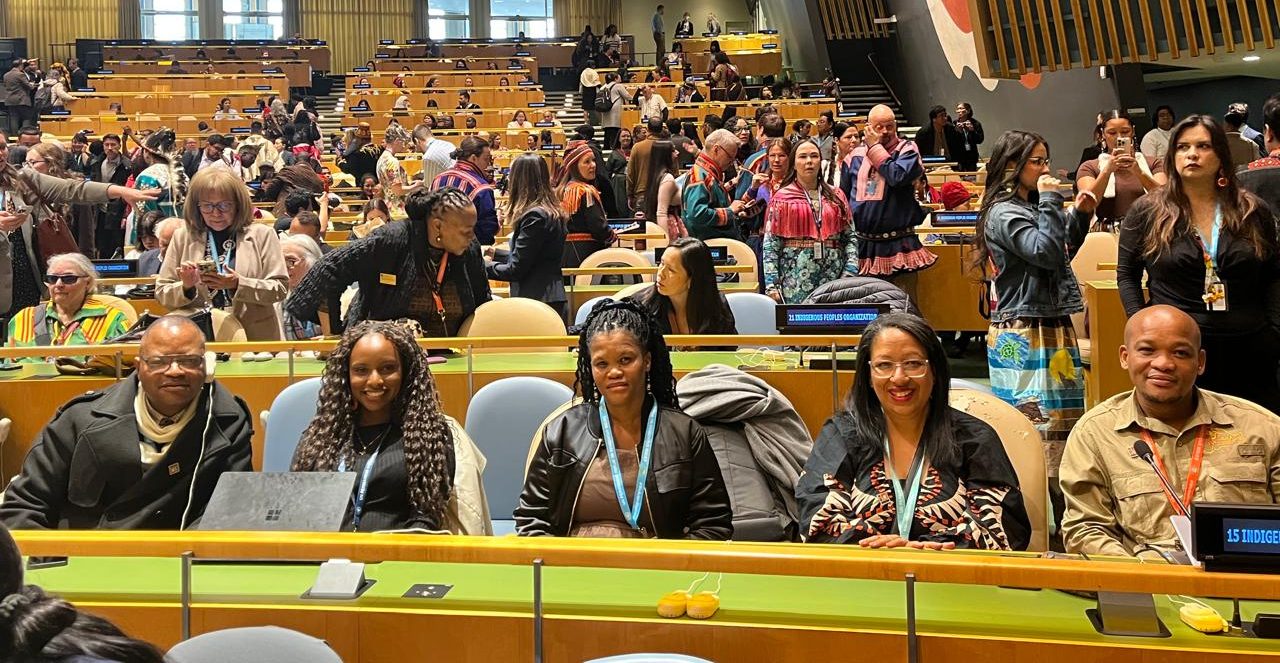
The African Communities Resource Rights Alliance (ACRRA) and the Indigenous Peoples of Southern Africa Network (IPNeSA), supported by Jamma Conservation & Communities, have secured a significant milestone for Indigenous Peoples across Southern Africa following the formal inclusion of their coalition statement in the official record of the 2026 United Nations Permanent Forum on Indigenous Issues (UNPFII).
As the United Nations’ leading platform for dialogue between Indigenous Peoples, governments, UN agencies, and international organisations, the UNPFII plays an important role in shaping global discussions on Indigenous rights, sustainable development, biodiversity, and human wellbeing. The recommendations and discussions emerging from the Forum help inform future international policy and influence major global processes, including negotiations under the Convention on Biological Diversity (CBD).
Having the Southern African coalition statement formally included in the UNPFII record ensures that the region’s priorities are now part of the official UN dialogue. It means these issues are documented within the UN system, can be referenced in future discussions, and help inform ongoing international policy processes relating to Indigenous Peoples’ rights, conservation, and biodiversity.
Bringing Southern African priorities to the global stage
During the Forum, the Southern African delegation delivered two formal statements during plenary sessions, calling for greater recognition of Indigenous Peoples’ rights, knowledge systems, and contributions to biodiversity conservation.
A central message was that Indigenous Peoples’ health, wellbeing, land, knowledge, and sustainable use of biodiversity cannot be separated. The delegation highlighted that recognising biocultural rights and rights-based approaches to conservation is essential not only for justice, but also for achieving effective and lasting conservation outcomes.
The statements drew attention to the ongoing impacts of colonialism, displacement, and the criminalisation of customary resource use, while calling for sustainable wildlife use to be recognised as a legitimate foundation for livelihoods, food security, cultural continuity, and community-led conservation.
The delegation also highlighted the increasing pressure facing Indigenous territories from extractive industries and emerging “green” and “blue” economy developments, emphasising that recognising Indigenous Peoples’ rights to land, territories, and natural resources is fundamental to conservation, climate resilience, and self-determined development.
A second intervention, delivered from a Botswana perspective, called for greater recognition of ancestral lands, Indigenous languages, customary knowledge systems, and stronger participation of Indigenous Peoples in national biodiversity planning ahead of the upcoming Conference of the Parties (COP) to the CBD in Armenia in October 2026. It also highlighted the importance of targeted support for Indigenous women and children.
Advancing biocultural rights
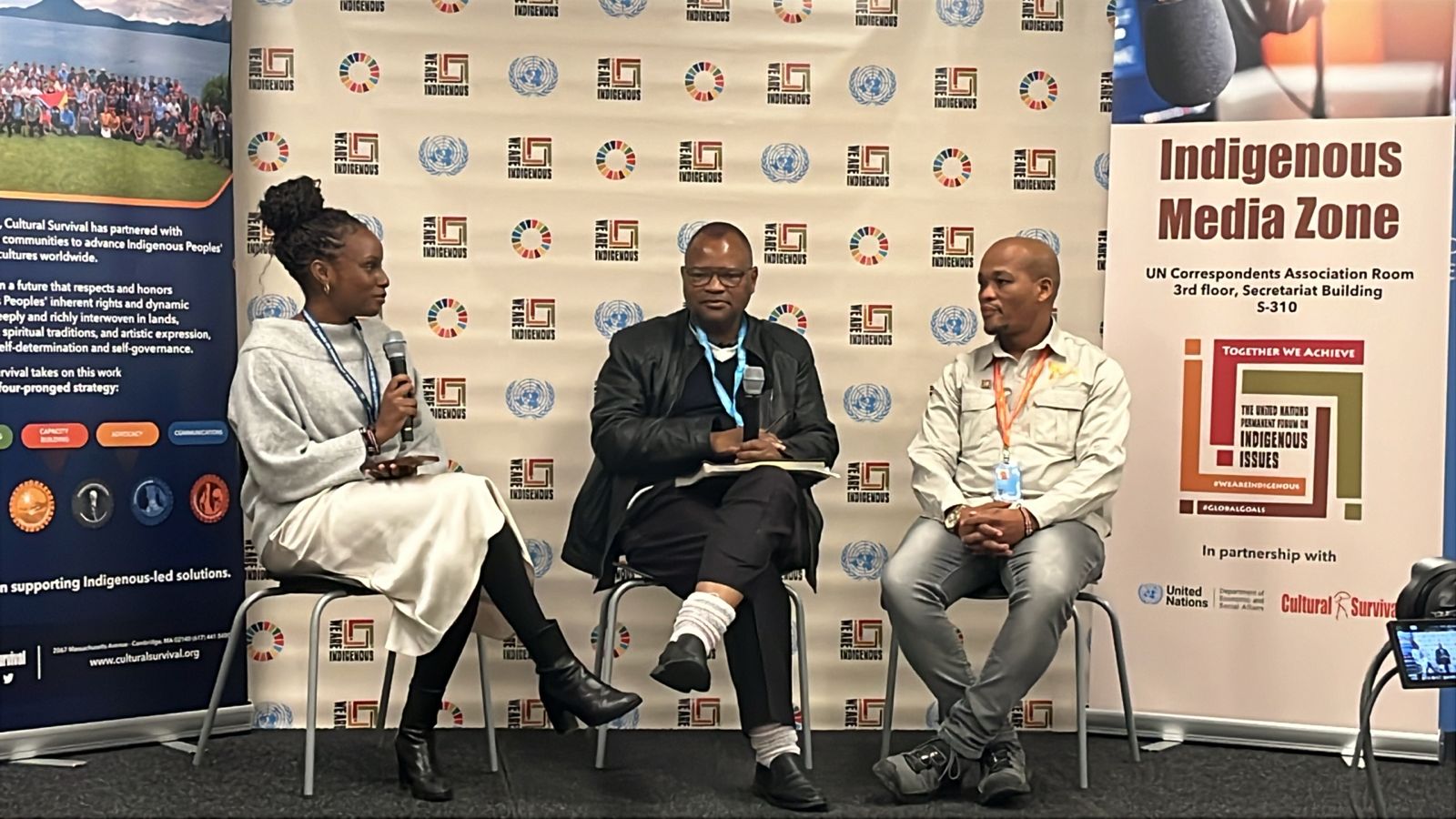
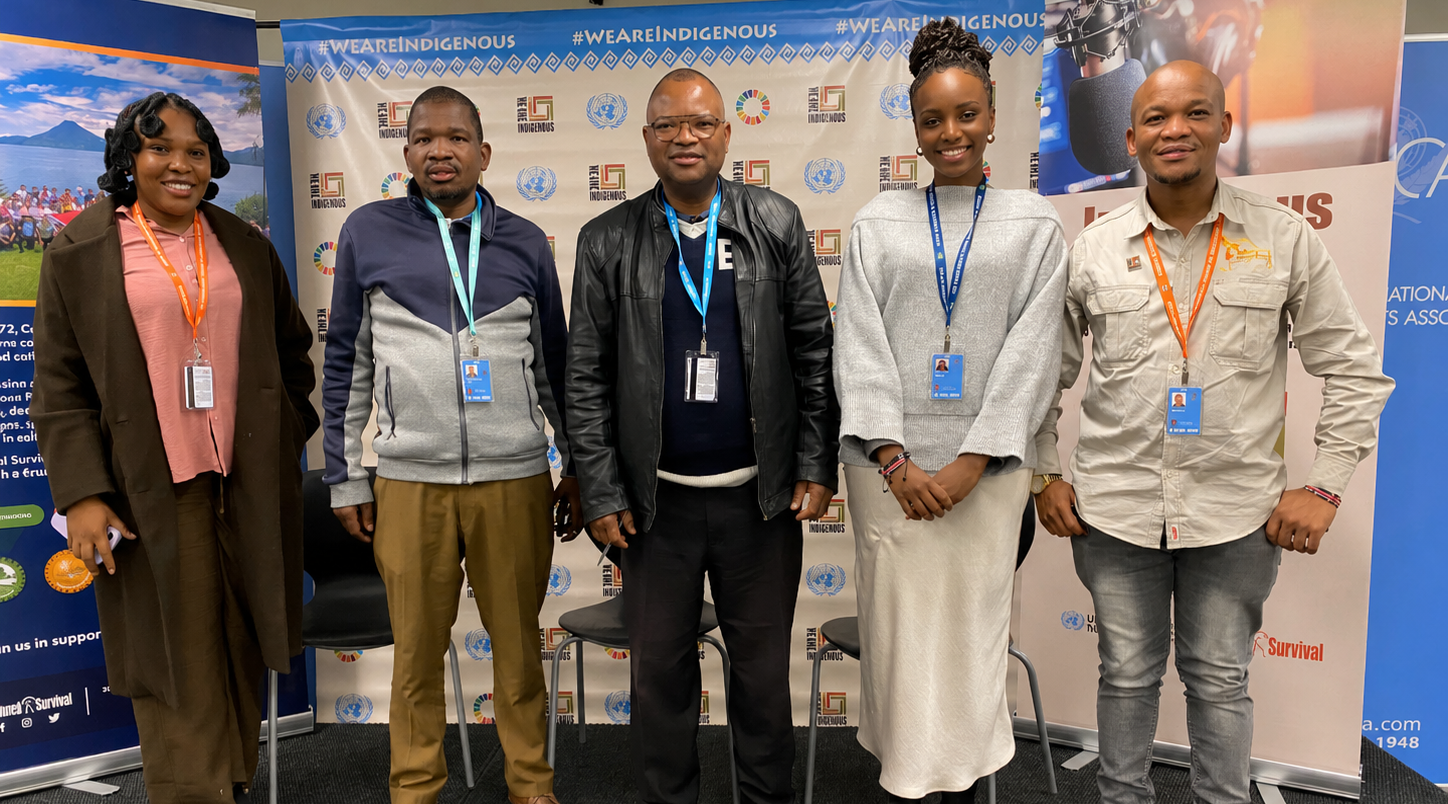
Alongside the formal sessions, ACRRA hosted a dialogue at the Cultural Survival Indigenous Media Zone exploring how biocultural rights frameworks and Community Protocols can provide practical tools for strengthening relationships between people, land, and traditional knowledge systems.
A key theme throughout the discussion was that biocultural rights are not solely a conservation issue. They are equally central to Indigenous health, wellbeing, human rights, and self-determined development. ACRRA also supported IPNeSA’s side event reflecting on the network’s development since its launch at UNPFII in 2024, demonstrating the continued growth of collaboration and shared advocacy across Southern Africa.
Looking ahead
Attention now turns to the next phase of international biodiversity negotiations, including the COP CBD in Armenia.
Building on the momentum generated at UNPFII, ACRRA and IPNeSA will continue working to ensure Southern African Indigenous Peoples’ priorities remain visible within international policy processes and that rights-based approaches to conservation continue to shape global biodiversity discussions.


© 2026 Jamma Conservation and Communities. Registered charity no. 1138785 | Designed by Oxygen

Active
Eland School is a community-based education initiative in the Khomani San community of South Africa’s Kalahari, delivering culturally sensitive early education. The school integrates the national curriculum with Indigenous knowledge and traditions to strengthen cultural identity and prepare learners for successful transition into secondary education.
Northern Cape, South Africa
Active
In many African rural areas, access to digital tools and support remains limited, leaving people of all ages disconnected from opportunity. This project is creating a central hub where community members can access support, build CVs, search for jobs, and stay informed.
Rietfontein, South Africa

Active
Is a registered Indigenous-led organisation working to protect the rights of Indigenous Peoples in Africa.
South Africa, Cape Town

Completed
This study examines the welfare impacts on wildlife from both human-caused and naturally induced mortality.
Oxford – partners with ALU in Kigali, Rwanda. Research impacts and relates to Southern Africa
Completed
This project conducts rigorous research to examine the potential role of regulated hunting in conservation.
Oxford based but research will impact Africa

Active
This groundbreaking project is the first to comprehensively assess the combined economic, conservation, and cultural benefits of non-commercial wild animal harvests in North America and southern Africa.
Based in Canada – North America and Southern Africa
Active
This project aims to unlock the $30 billion potential of Southern Africa’s wildlife economy by strengthening Community-Based Natural Resource Management (CBNRM) practices.
Based in Florida but carried out in (Mozambique, Kenya, Botswana, Namibia, South Africa)
Completed
This initiative strengthens the IUCN Sustainable Use and Livelihoods Specialist Group (SULi) to expand its reach and influence, especially within the Global South.
Based in London with Global membership network spreading to Eastern and Southern Africa region
Completed
This project provides critical support to governments developing policies to manage human-wildlife conflict (HWC), an escalating issue as human populations expand into wildlife habitats.
Global network with a focus in Africa
Completed
This project introduces sustainable fish farming practices to the Mkushi and Luano districts, where food security and income stability are pressing challenges.
Based in Zambia
Completed
This project takes a multi-faceted approach to improving livelihoods, health, and education in Zambia’s Mkushi and Luano regions.
Based in Zambia
Active
Human-wildlife conflict (HWC), especially with elephants, is a growing challenge in Mozambique, endangering conservation and community livelihoods. As populations expand, conflicts intensify, leading to crop destruction, property loss, and diminishing tolerance for wildlife. This project supports a comprehensive HWC management system across 32 high-impact districts.
Based in Mozambique
Active
Indigenous Peoples and Local Communities (IPLCs) across Southern Africa often face barriers to having their voices heard in decisions about natural resources that directly impact their lives. The Community Leaders Network (CLN) plays an essential role in advocating for these communities on issues like natural resource management, biodiversity conservation, sustainable agriculture, and eco-tourism.
Namibia – Windhoek (but spreads out to South Africa, Botswana, Namibia, Zimbabwe, Zambia, Mozambique, Malawi, Angola, Tanzania, and Madagascar)
Completed
This project addresses leopard conservation in the Western Cape, South Africa, a region where human encroachment and habitat fragmentation threaten wildlife.
Based in Eastern and Western Cape – South Africa
Completed
This project investigates perceptions around controversial conservation issues in sub-Saharan Africa.
Based in Oxford but carried out in Kenya, Tanzania, and Zimbabwe
Completed
This project amplifies the voices of Southern African rural communities who rely on sustainable wildlife management for their livelihoods and cultural heritage.
Based in Zimbabwe (but network spreads across South Africa, Botswana, Namibia, Zimbabwe, Zambia, Mozambique, Malawi, Angola, Tanzania, and Madagascar)