
In Europe, communities are having to adapt to life alongside increasing wolf populations, while southern African communities continue to face the daily reality of living with elephants and lions. In North America, wildlife management is shaped by a complex network of state agencies, hunting traditions, and public trust responsibilities. And across Asia, conservation unfolds amid the dense human populations and rapid development pressures.
On the surface, these realities could hardly seem more different.
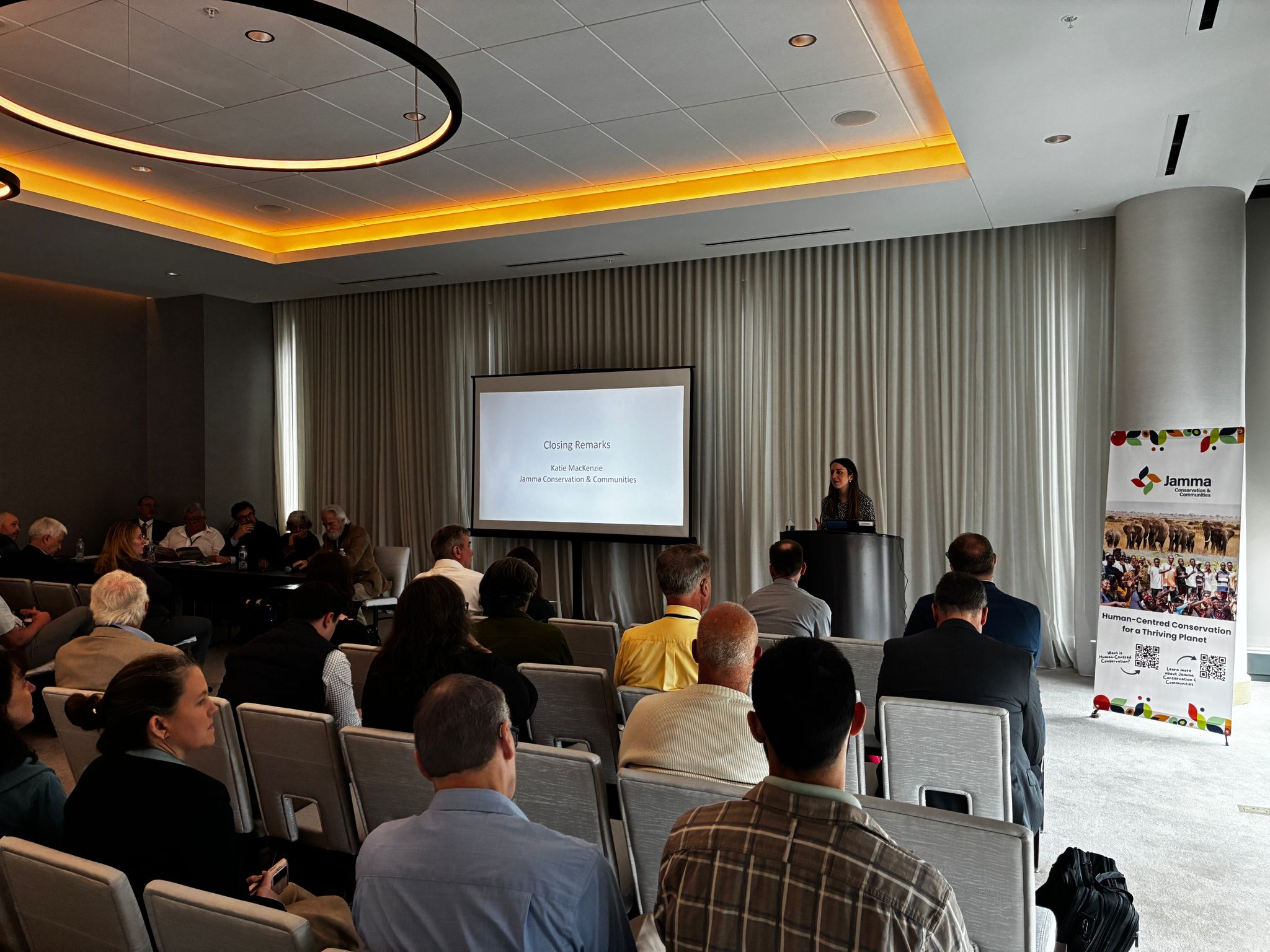
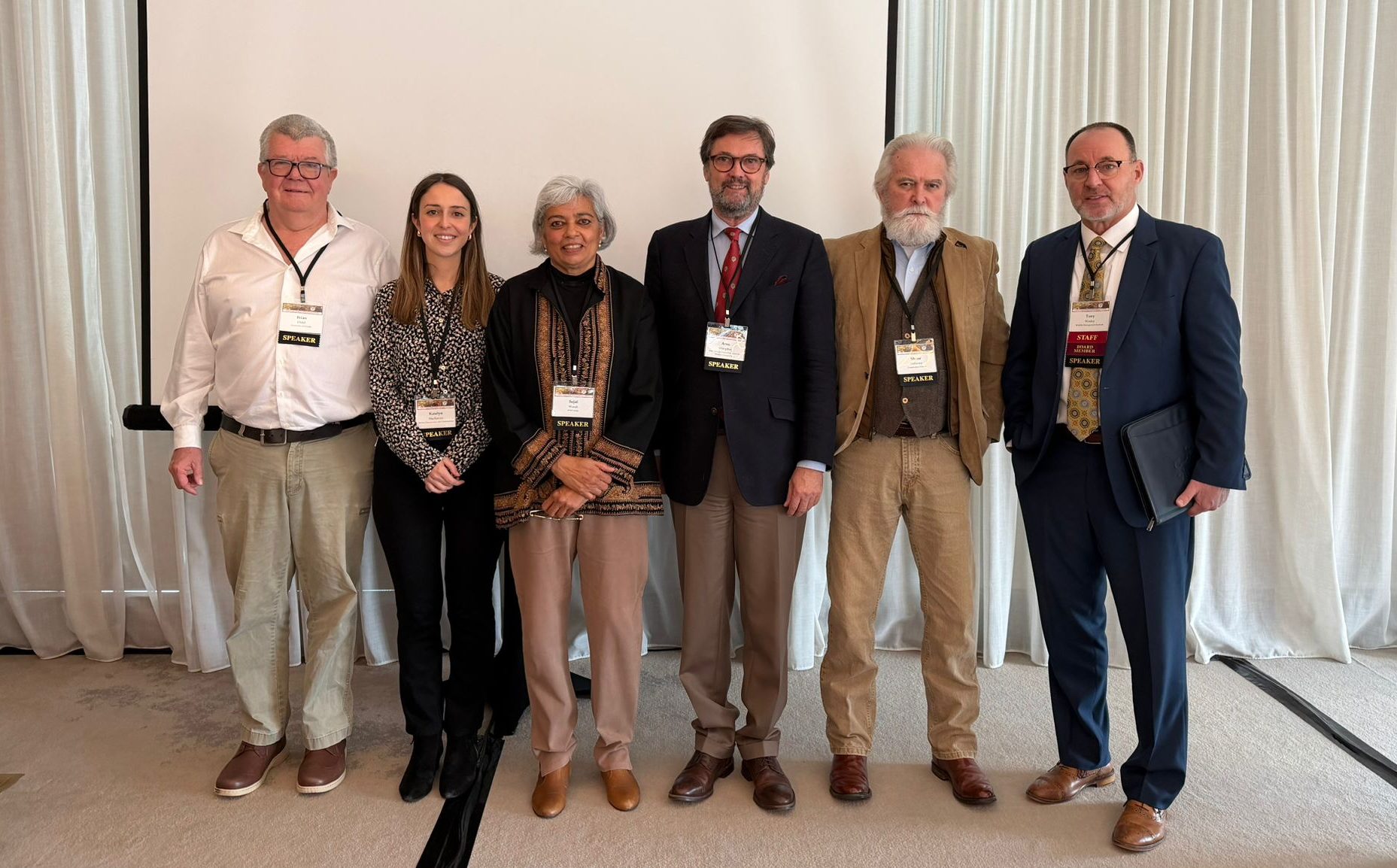
Yet when conservation practitioners from four continents compared experiences at the 2026 North American Wildlife and Natural Resources Conference, during a session hosted by Jamma Conservation & Communities, the Wildlife Management Institute, Conservation Visions, and the Association of Fish & Wildlife Agencies, they discovered something surprising.
While the species, landscapes, and governance systems differed, many of the underlying conservation challenges were remarkably familiar. Discussions repeatedly returned to themes of trust, legitimacy, incentives, human wellbeing, and how to secure lasting support for conservation in a rapidly changing world.
Although conservation can look different from one region to another, the conversations revealed how many of the tensions shaping conservation today transcend borders.
Six insights stood out.
Lesson 1: Good governance matters as much as good science
Conservation is often presented as a scientific challenge. But science alone rarely determines whether conservation succeeds or fails.
Across the world, conservation outcomes are shaped by governance systems, incentives, institutions, and public trust. The most effective conservation strategies are not necessarily those with the best ecological data, but those that also earn legitimacy and support from the people affected by them.
Whether in North America, Africa, Europe, or Asia, conservation ultimately depends on people, the decisions they make, the systems they operate within, and the incentives that influence their behaviour.
Lesson 2: Conservation challenges are more similar than we often assume, but context matters
Across continents, practitioners are grappling with familiar issues, such as balancing development and conservation, managing human-wildlife conflict, navigating political pressures, and maintaining public support.
Yet the social, cultural, historical, ecological, and political realities surrounding them can vary enormously.
Recognising these differences is critical. Too often, conservation debates either overstate similarity or overemphasise difference. The truth lies somewhere in between. There is immense value in learning across borders, but those lessons must be applied with an understanding of local realities.
Lesson 3: Conservation must extend beyond protected areas
Protected areas remain an essential conservation tool. Yet many of the landscapes that matter most for biodiversity are also places where people live, work, farm, and derive their livelihoods.
This raises a challenge that is becoming increasingly important around the world: how do we conserve nature in landscapes that are not set aside exclusively for conservation?
From agricultural lands to communal areas and working landscapes, the future of conservation will depend not only on what happens inside protected areas, but also on how people and wildlife coexist beyond their boundaries.
Lesson 4: Reconnecting people with conservation realities is becoming increasingly important
As societies become more urbanised, many people have less direct experience with wildlife and natural resource management than previous generations.
Yet public attitudes and political decisions continue to shape conservation outcomes.
This creates a growing challenge for conservation: how do we reconnect people with the realities, trade-offs, and complexities involved in managing wildlife and natural landscapes? How do we ensure that those making decisions about conservation understand the perspectives of the people living closest to its impacts?
These questions are becoming increasingly relevant across continents.
Lesson 5: There is immense value in learning across borders
The conference challenged the assumption that conservation challenges are fundamentally different from one region to another.
While local realities must always shape solutions, many of the underlying issues are remarkably familiar. Questions of governance, incentives, public support, coexistence, and legitimacy emerge in different forms across continents.
That is why international exchange matters. Not because one region has all the answers, but because practitioners facing similar challenges can learn from one another’s successes, failures, and experiences. In an increasingly interconnected world, conservation is strengthened when ideas, lessons, and perspectives flow across borders.
Lesson 6: Conservation is becoming increasingly political
Conservation is no longer shaped solely by ecological priorities. Across the world, decisions about wildlife and natural resources are increasingly influenced by politics, public opinion, economic pressures, identity, and competing visions for how landscapes should be managed.
Whether the issue is predators, sustainable use, protected areas, and land rights, conservation practitioners are finding that success depends not only on sound science but also on understanding public discourse, governance systems, and the social and political contexts in which decisions are made.
Taken together, these lessons suggest that the future of conservation will depend not only on conserving biodiversity. But also understanding the people, systems, and societies in which conservation takes place. For Human-Centred Conservation, that is both the challenge and the opportunity. By recognising that ecological and human outcomes are deeply interconnected, it offers a framework for tackling shared conservation challenges in ways that are grounded in local realities while contributing to global goals.


© 2026 Jamma Conservation and Communities. Registered charity no. 1138785 | Designed by Oxygen

Active
Eland School is a community-based education initiative in the Khomani San community of South Africa’s Kalahari, delivering culturally sensitive early education. The school integrates the national curriculum with Indigenous knowledge and traditions to strengthen cultural identity and prepare learners for successful transition into secondary education.
Northern Cape, South Africa
Active
In many African rural areas, access to digital tools and support remains limited, leaving people of all ages disconnected from opportunity. This project is creating a central hub where community members can access support, build CVs, search for jobs, and stay informed.
Rietfontein, South Africa

Active
Is a registered Indigenous-led organisation working to protect the rights of Indigenous Peoples in Africa.
South Africa, Cape Town

Completed
This study examines the welfare impacts on wildlife from both human-caused and naturally induced mortality.
Oxford – partners with ALU in Kigali, Rwanda. Research impacts and relates to Southern Africa
Completed
This project conducts rigorous research to examine the potential role of regulated hunting in conservation.
Oxford based but research will impact Africa

Active
This groundbreaking project is the first to comprehensively assess the combined economic, conservation, and cultural benefits of non-commercial wild animal harvests in North America and southern Africa.
Based in Canada – North America and Southern Africa
Active
This project aims to unlock the $30 billion potential of Southern Africa’s wildlife economy by strengthening Community-Based Natural Resource Management (CBNRM) practices.
Based in Florida but carried out in (Mozambique, Kenya, Botswana, Namibia, South Africa)
Completed
This initiative strengthens the IUCN Sustainable Use and Livelihoods Specialist Group (SULi) to expand its reach and influence, especially within the Global South.
Based in London with Global membership network spreading to Eastern and Southern Africa region
Completed
This project provides critical support to governments developing policies to manage human-wildlife conflict (HWC), an escalating issue as human populations expand into wildlife habitats.
Global network with a focus in Africa
Completed
This project introduces sustainable fish farming practices to the Mkushi and Luano districts, where food security and income stability are pressing challenges.
Based in Zambia
Completed
This project takes a multi-faceted approach to improving livelihoods, health, and education in Zambia’s Mkushi and Luano regions.
Based in Zambia
Active
Human-wildlife conflict (HWC), especially with elephants, is a growing challenge in Mozambique, endangering conservation and community livelihoods. As populations expand, conflicts intensify, leading to crop destruction, property loss, and diminishing tolerance for wildlife. This project supports a comprehensive HWC management system across 32 high-impact districts.
Based in Mozambique
Active
Indigenous Peoples and Local Communities (IPLCs) across Southern Africa often face barriers to having their voices heard in decisions about natural resources that directly impact their lives. The Community Leaders Network (CLN) plays an essential role in advocating for these communities on issues like natural resource management, biodiversity conservation, sustainable agriculture, and eco-tourism.
Namibia – Windhoek (but spreads out to South Africa, Botswana, Namibia, Zimbabwe, Zambia, Mozambique, Malawi, Angola, Tanzania, and Madagascar)
Completed
This project addresses leopard conservation in the Western Cape, South Africa, a region where human encroachment and habitat fragmentation threaten wildlife.
Based in Eastern and Western Cape – South Africa
Completed
This project investigates perceptions around controversial conservation issues in sub-Saharan Africa.
Based in Oxford but carried out in Kenya, Tanzania, and Zimbabwe
Completed
This project amplifies the voices of Southern African rural communities who rely on sustainable wildlife management for their livelihoods and cultural heritage.
Based in Zimbabwe (but network spreads across South Africa, Botswana, Namibia, Zimbabwe, Zambia, Mozambique, Malawi, Angola, Tanzania, and Madagascar)